Welcome

Double exposure self-portrait

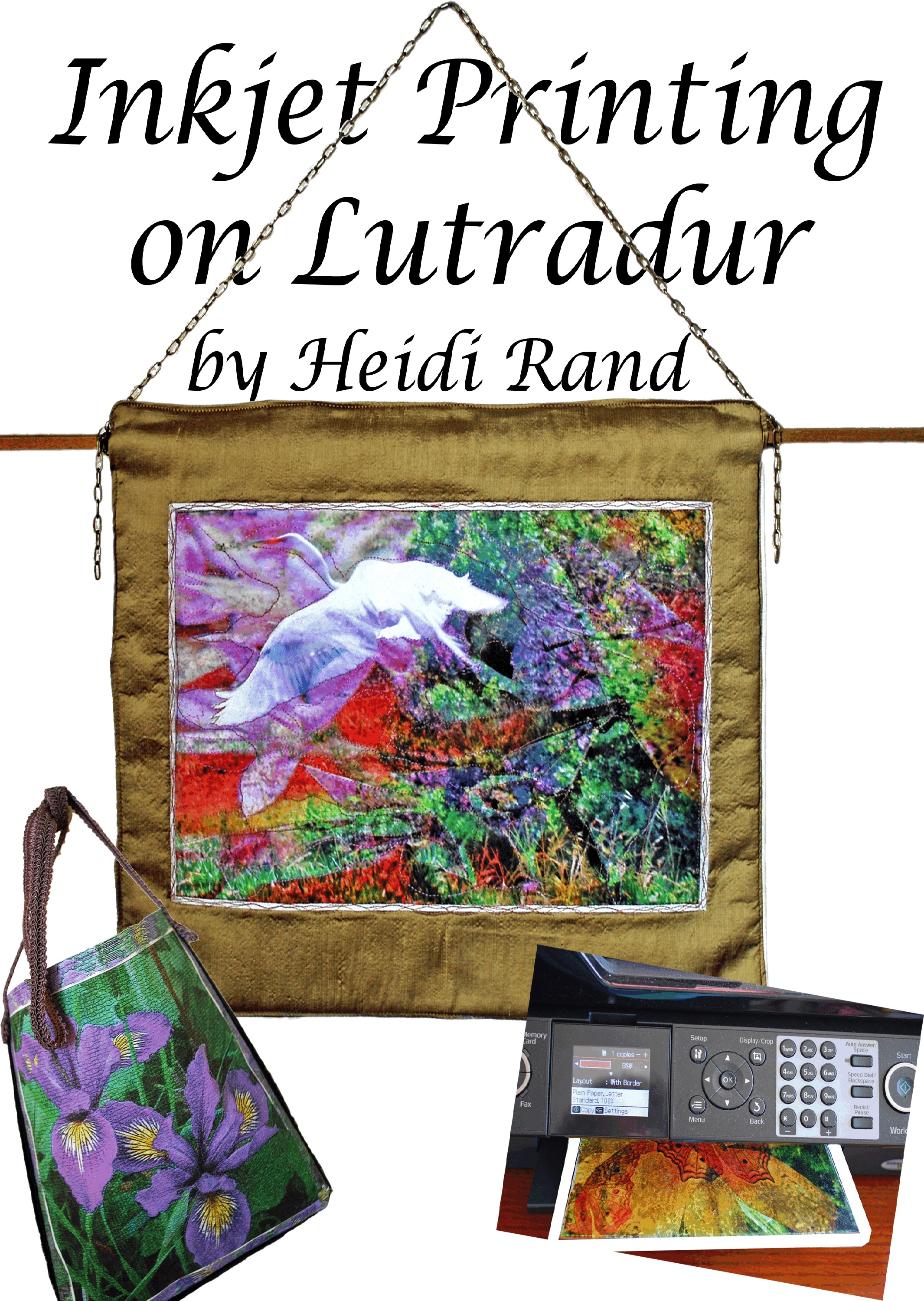
Thanks for visiting my blog! You can see my photos and original designs at my WEBSITE or my SMUGMUG GALLERIES .  My handmade artwork is available through my ARTFIRE SHOP or my ETSY GALLERY. You can also see a large variety of products with my designs on them (sneakers, ties…) at my ZAZZLE GALLERY.  See my ebook on Inkjet Printing on Lutradur at my WEBSITE, or at my ARTFIRE SHOP, or on LULU.  Interested in learning to print on fabric?  See my ebook, Inkjet Printing on Fabric, available through my WEBSITE, or on ARTFIREETSY or LULU.  The books are now also available for the kindle through Amazon: Inkjet Printing on Fabric, Kindle version, and Inkjet Printing on Lutradur, Kindle version. I have several classes up on Craftedu.com including Inkjet Printing on FabricInkjet Printing on Lutradur, and Handmade Pet Collars.
Follow my Facebook fan page. Email me at heidirand@gmail.com for more information.

Kindle-version books on Amazon:
http://www.amazon.com/dp/B005HZZJOK  http://www.amazon.com/dp/B005JK6KOG

New Year Muir Woods Walk 2011

One of our traditions to start a new year is to visit Muir Woods National State Park.  We went yesterday, joining the crowds of tourists from all over the world.  A fine misty rain was falling, and the pine smell was intoxicating. Unlike most of the visitors, who are there to see the huge, majestic redwood trees, we were in search of a tiny flower called a brownie, also known as slink pods, scoliopus and fetid adders-tongue. But before we found any we spotted some other wonders. George noticed this Ensatina salamander on a log:

The ranger had told us that there weren’t many banana slugs out because it has been so dry this summer and fall, but we did see one:

We also saw some interesting fungi–

The rain spotted spider webs with wonderful glittering light:

And, happily, in the same location we have sighted them in previous years, we were excited to see that the brownies were, indeed, there!  George was the first to spot one, and this is the one he found:
The brown-spotted leaves are so distinctive.

The flowers that have already bloomed and wilted leave the spikes hanging down. For perspective, these leaves are about 3 to 4 inches.  This is a closeup shot down inside the foliage, with a flower bud about to shoot up and bloom:

I like the nickname brownies, but if you want to show off, you can also use the Latin: scoliopus bigelovii.  The name means “crooked foot”, because the flower stalk curves over after the flower is pollinated and grows too heavy for the slender stalk.   They’re also called Fetid Adder’s Tongue, and yes – that does refer to the scent, which is slight but unpleasant.  Scoliopus is part of the lily family (Liliaceae) and it is a perennial.  The flowers are quite small, at most about an inch, and the entire plant ranges from 3 to 6 inches tall.  This one shows a flower blooming and a bud down at the bottom.

So that’s how we choose to start our New Year — celebrating nature, reveling in finding amidst the roots of the tallest trees in the world the first tiny flowers that bloom in the winter.  What are your New Year traditions?

Monarch butterfly emerges

The first monarch butterfly of the batch of eggs that we found on the milkweed in our garden has emerged! Picking up where my last blog post, Monarch caterpillar to chrysalis, left off – this is how the chrysalises have looked for the past few weeks:

The first one to form a chrysalis started to darken yesterday. Actually it looks dark, but what’s happening is that the chrysalis is becoming transparent, so you can see the butterfly inside. Soon you can see the pattern and color of the wings.

3:32 p.m.

I took the photo above around 3:30.  I was running upstairs every so often to check, but I finally just settled down next to the butterfly house with a book. I looked up at about 4:15 and saw that the chrysalis was cracked!

4:17 p.m.

The butterfly holds onto the chrysalis with its legs – the wings and body drop out.

The picture above shows the abdomen hanging down. The abdomen is filled with fluid that the butterfly uses to inflate its wings.

The wings are filling and lengthening.

This is an extreme closeup showing the curled proboscis, and the legs holding onto the chrysalis.

4:20 p.m.

The forewings are now showing (peeking out from under the hindwing at the bottom right).

The forewings continue to lengthen.

Some more…

Just a bit more…

4:37 p.m.

And finally, about a half hour after the butterfly began to emerge, it’s in its final form. It continues to hang, letting its wings dry and harden. Soon we’ll release the butterfly, to continue the cycle!

These are my other posts about the monarch who laid the eggs, the caterpillars, and the chrysalis:

Monarch in the Garden

Monarch Eggs in the Garden!

First Monarch Caterpillar Emerges

Monarch Caterpillar to Chrysalis

Monarch caterpillar to chrysalis

If you’ve seen my earlier posts (I list them at the bottom for you, with links), you know that a monarch butterfly visited our garden and left several eggs on our milkweed.  We brought the eggs in and when the caterpillars emerged, we fed them. I haven’t posted many photos of the caterpillars – but I promise I’ll do a blog post about them. For now, I’m too excited and want to show you what happens when a caterpillar pupates. We’ve had several do so already, and I couldn’t get photos of them, so I was glad to see that this fellow -

was right in front of the cage, and looking for a spot to form his “J” -that’s when they attach themselves securely to a surface so they can hang down and pupate.

He hung like that for several hours, then all of a sudden I noticed that he had straightened out.

He was starting to transform! His larval skin split, starting at his head – which is at the bottom.

The skin kept splitting higher.

Finally the larval skin was all crumpled at the top. It fell off a second after I took this photo.

The chrysalid twists and turns violently during the entire process, which is one reason some of the photos are not completely in focus.

After the skin fell off, he twisted and turned a bit more. He will contract in size, and the outer surface of the chrysalis will smooth out. The time from when he relaxed down from the “J” until I took the last photo was only 9 minutes!  I don’t have a photo of him in his final chrysalis form, but this is one of the others that turned yesterday:

I feel so lucky to be able to experience this miracle firsthand, I hope you enjoyed the photos!

These are my other posts about the monarch who laid the eggs, and the caterpillars:

Monarch in the Garden

Monarch Eggs in the Garden!

First Monarch Caterpillar Emerges

Butterflies & Barbie at the Albany Library

Together again for the first time! Christina Van Horn, creator of the amazing Barbie Display – last spotted in October in the El Cerrito Library display case, and I with an expanded version of the butterfly display I had there in June, have teamed up and taken our combined show on the road – actually just a few miles down San Pablo Avenue to the Albany Library.

Barbie and Butterflies

Barbie and Butterflies at the Albany Library

Christina’s “Say Hello to Barbie!” is a loving tribute to an icon, a playful and creative reminder for us to reach back to that part of ourselves that we may have packed away when we put our toys and dolls aside. The power of Barbie to evoke emotions was evident when several people stopped to share their memories of the dolls as we were putting the display up.

Say Hello to Barbie!

Say Hello to Barbie!

Christina has dressed and accessorized seven Barbies from a range of years. The variety of the garments in which Christina chose to dress the Barbies is amazing. And check out the great hairstyles! Christina even constructed and sewed the sumptuous bed and bedding in which ‘middle-aged’ Barbie lies, reading. She also describes Barbie’s history, and discusses her impact, including citing controversies, which, she notes, often involve parodies of Barbie and her ‘lifestyles.’

Butterflies in Your Garden

Butterflies in Your Garden

One of my aims for my part of the display is to show people that they can garden to attract and nurture butterflies in their gardens.  Along with some of my photos of the life cycle of the monarch butterfly and of the anise swallowtail butterflyand my artwork and crafts from my butterfly photos, I’ve put together lists with information about local butterflies, their food sources and helpful plants.  I’m attaching the lists to this post as pdfs for you to read and print out for your own use.  If you want to copy them for any other use, please contact me for permission.

It’s great timing to have the display in Albany right now – the monarch butterflies have returned in great numbers to the shelter of the eucalyptus trees on Albany Hill.  This is a photograph I took two weeks ago there.

Monarchs wintering on Albany Hill

Monarchs wintering on Albany Hill

If you have any questions about Barbie or butterflies, just let Christina, George, and me know in the comments.  We hope you can make it to the display!

Here are the pdfs I mentioned above — click on the bolded text to download each pdf.

First, a partial list of Bay Area butterflies, with my photographs of a few of the butterflies:

Bay Area Butterflies

Second, a partial list of larval host plants for local butterflies. These are the most critical plants, because the butterflies need them to lay their eggs on. When the eggs hatch, they eat the plant to survive until they change into chrysalises:

Gardening to Attract Butterflies: Larval Hosts

Third, nectar plants for butterflies. This is also a partial list to give you some ideas about what you can plant to provide nectar for Bay Area butterflies. Most adult butterflies feed on flower nectar. Not all flowers provide nectar, so if you really want to help the butterflies, try to include as many nectar-providing plants as possible. The butterflies will waste energy visiting flowers that don’t provide nectar. And of course butterflies are great pollinators, and as they feed on the nectar they carry pollen from previously visited flowers:

Bay Area Butterfly Nectar Plants

George also wrote a wonderful description of the evolution of our garden and yard into a wildlife habitat:

Killing our lawn, by George McRae

Garden Delights Gift Sale and Open Studio

Wow, I can’t believe it’s Open Studio time again! I’ll be open the first two weekends of December -the 3-4th and 10-11th, from 11 a.m. to 5 p.m. My studio is clean and I’ve had so much fun setting up my artwork and crafts. I haven’t taken photos of it yet, but this is one from last year, the view when you come in the door:

I have a lot of new things to show this year. I’m really excited to present my new collection of silk scarves.

Silk scarf - sunburst

Along with my framed and unframed prints and art pieces, I have a wide assortment of gifts for all, ranging from decorated boxes and tiles, purses, totes,  baby bibs and onesies, t-shirts, bowties, home decor including fabric vases and bowls, fabric-covered light switch plates, ornaments, pillows, original-design fabric yardage, and more.  I’ve got lots of different kinds of handmade jewelry.  I even have original-design pet collars for dogs and cats, and catnip bags.

There are many gifts for less than $20, and lots are less than $10! Since the weather is good I’ve also got room outside for a sale table and snacks. Come by to chat – never any pressure to buy!

For you out-of-towners, check out my website and online galleries!

http://GardenDelightsArts.com
http://GardenDelightsArts.artfire.com
http://GardenDelightsArts.etsy.com
http://zazzle.com/GardenDelightsArts*

If you’re busy with your own holiday sales or can’t make it, I leave the studio all set up for about a month, and I’m always open by appointment.  If you have any questions or need directions, email me at heidirand[at]gmail.com or leave a comment here.  Oh yes - I’ve been collecting milkweed seeds (for the monarch butterflies) to give out as long as the supply lasts -free!

Hummingbirds in the trees

Growing up back east I don’t recall ever seeing a hummingbird. I’m amazed that to see these flying treasures now, all I have to do is go out to our garden or up on our deck. This female Anna’s hummingbird was perched on a tree in our yard.

Hummingbird on branch

As part of making our garden into a wildlife habitat through the National Wildlife Federation (NWF), we provide food, water and cover for local and migrating animals. George’s garden includes many flowers for nectar, and he is always replenishing the sugar-water feeders for the hummingbirds.  He also avoids using pesticides, because that could harm or kill the birds.  Here’s an article by NWF about feeding hummingbirds.  The sugar-water is a supplement to their diet of insects and nectar.  This article goes into more detail, and has good advice about the important issue of keeping your feeders clean.

This is a male Anna’s – the brilliant color of his head and neck shines with iridescence when it catches the light.

Anna's hummingbird on branch

This is another male Anna’s.  You see how different the color of his feathers appears, this hummer shines with a more magenta hue.

Anna's hummingbird

Hummingbirds are among the limited species of birds that can hover.

Hummingbird hovering

When awake, they are almost constantly in motion. I had to quickly shoot the photos of them perching on the tree, because they don’t land for long. Here’s a shot of two of them, one about to land on a branch, and another zooming by above.

I caught a shot of this young hummer with his beak open.

Anna's hummingbird on tree

Do you know what kinds of hummingbirds visit or live in your area? I’m lucky to have George, who has studied this extensively, to tell me who’s who.  He said that at this time of year we’re getting only the Anna’s hummingbirds, and that they stay with us year-round.  Does your garden have nectar flowers or other plants to attract and feed hummingbirds?  Do you have hummingbird feeders to supplement their diet?

First monarch caterpillar emerges

Did you see my post about the monarch butterfly in our garden? 

And my follow-up post about the eggs that she left on our milkweed?

Here’s one of my photos of mama monarch:

And here’s one of my closeups of one of the eggs we found – for scale, remember that they’re about the size of the head of a pin!
I keep telling you about the size of the eggs, so here’s a photo I took of an egg alongside a normal-sized straight pin:
We decided to raise them inside, because it greatly increases their survival rate. We found 13 eggs, and carefully brought them inside on Thursday. By Saturday some of the eggs had lost their yellowish color, now appearing grayish-white with darker shading inside (the caterpillar’s skin has formed and is showing through the egg, which is actually translucent).
Here’s a tighter closeup:
And voila! By Saturday evening the first tiny caterpillar had eaten its way out of its egg. The newly-hatched larva is a little more than a millimeter long, and has a gray body with a shiny black head. Here he (or she) is:
You can see its egg to the right. The tiny caterpillar is exploring and eating the milkweed.
I just checked, and more of the caterpillars are emerging, so check back for more photos!
In fact, here’s a new photo of our second baby. This caterpillar emerged from the only egg of the batch that we found on another type of milkweed, the Asclepias physocarpa.
He’s headed back to eat more of his eggshell.
And finally, another photo with a pin for scale, showing the size of the newly emerged caterpillar:

Monarch eggs in the garden!

Well, guess what? George was right that she was a female – she left us some precious gifts. Yesterday I noticed many tiny yellow eggs sprinkled on our milkweed plants. Here’s an extreme closeup of one, it’s about the size of the head of a pin!
Isn’t it amazing how she tucked it up under the cap of the bud of the unopened milkweed flower? Most of the eggs that we spotted are on the Asclepias cancellata “Wild Cotton,” which we got at Annie’s Annuals & Perennials.  You can read about this beautiful milkweed plant on Annie’s website. Here’s another extreme closeup:
You can see the oval shape and tiny lines (which my poor eyes can’t even see without blowing up my photos).  This side view really shows the oval shape:
 I think this one is getting ready to emerge from the egg – the black speck appears to be the tiny larvae (caterpillar) breaking through:
Click here to see an incredible time lapse video on Youtube of a monarch caterpillar breaking out of its egg.  Pulling back a little, you can see this one tucked among the unopened flower buds:
Finally, I really hate to post an out-of-focus photograph, but I took this one last night when we first found them, and the light was fading and I had no time to set up my tripod (excuses, excuses), so sorry for the fuzziness, but it shows you the size of the egg in scale with George’s finger.
I mentioned in my prior blog post that we have hardly seen any monarchs in our garden for a couple of years. I checked, and it was Spring 2009 when we last had the good luck to find monarch eggs on our milkweed. We raised and released them, and I photographed the entire process. You can see those photos by clicking here.  The mortality rate of butterflies left outside is quite high, due to predators, weather factors and other causes, so raising them indoors greatly increases the chance that they will survive. We’re honored that this monarch trusted us with her eggs, and we will guard and nurture them until they emerge, then let them go to continue the cycle!

Photo of the week

With the weather turning and much of the garden going to sleep, I enjoy taking photos of the varied dried seed pods. Until now I had never noticed the seed pods of the Naked Lady lily, Amaryllis belladonna. The pods are dried brown crinkly peanut-looking things, but open to reveal the most beautiful pearly white, pink or red seeds.

Amaryllis belladonna seed pod

Monarch in the garden

A good day –a monarch butterfly is flitting around our garden! Here she is perched on the leaves of the peach tree.
Monarch butterfly perched on a peach tree
It has been a couple of years since George watched a monarch lay eggs on the milkweed in our backyard. We brought some of the eggs inside to raise in safety.  Click here to see the photos I took of the whole process, from the tiny eggs, to the caterpillars, to the chrysalises, and finally to the butterflies which emerged (and which we released.)
But despite all of the milkweed George has planted to attract them, we’ve hardly seen any monarchs in the garden since that special year.  So imagine my delight when I saw this one — she (George got close enough to identify her as female) was sunning on the angel’s trumpet, and she also seemed to like the fennel plant and the dogwood tree, as well as the milkweed.   Here she is on the dried seed pods of the fennel, which is one of the anise swallowtail butterfly’s larval food sources.
She spent quite a bit of time on the milkweed, and I’m hoping she left some eggs.
I love this milkweed, it’s Asclepias physocarpa. Bees like it too – can you see the honeybee a bit to the left of the butterfly? Physocarpa is also known as “Family Jewels” because the seed pods look like … well, here’s a photo I took yesterday of one of the dried seed pods, see for yourself.
Here’s a closeup of the butterfly on the milkweed, you can see her poor tattered wing.
Did you know that one of the monarch butterfly’s protective characteristics is to poison its predators? In the larval stage it eats milkweed leaves to incorporate the milkweed toxins into its body. Perhaps a bird realized after getting a bite that it didn’t want to keep eating.